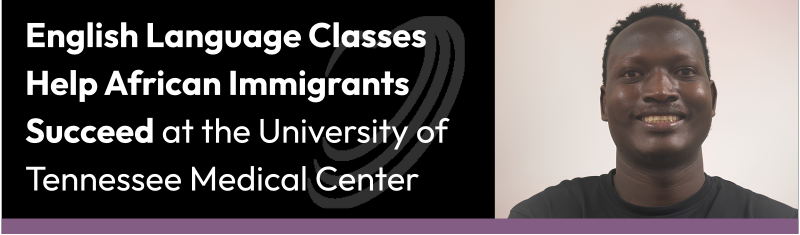
Patrick Mbutulo could not speak English when he began work as a dishwasher last year at the University of Tennessee Medical Center. The native of Tanzania, on Africa’s west coast, only spoke Swahili.
Since taking weekly, two-hour English language classes, he has learned the language well enough to take on new responsibilities. Because he can now read all of the Morrison food recipes, Patrick now works in the kitchen, prepping all entrees for the hospital’s 600 patients, as well as any breakfast side items.
His new understanding of English is also helping Patrick take on other projects, says Missy Owen, his supervisor. “He’s more confident, more vocal, and speaks out more in our daily huddles,” she says. “He wants to help everyone, so if they are struggling, he’s right there to help them.”
How English Language Classes Help Refugee Associates Advance Their Careers
Patrick is one of approximately 30 Morrison associates who moved from Africa to the United States and are enrolled in the classes, which began in September 2025. All started out as dishwashers or pot washers, but six people have learned English well enough to earn jobs with more responsibility.
Their development is due to the foresight of Compass General Manager Arthur Sparks and David Thompson, Morrison’s Director of Food and Nutrition. Both realized the potential benefits of helping the refugees grow with the company.
A Workforce Development Program Built on Opportunity
The two men teamed up to hire Bridge Refugee Services, a nonprofit organization in Knoxville, to teach the classes. Another associate, Niyonkuru Pascal, who speaks English, Swahili, and Kinyarwanda and works in food services, serves as an interpreter during the classes.
Sparks said Morrison began hiring the Tanzanian and other African immigrants about four years ago. The workforce has gradually grown as others in the Knoxville Tanzanian community learned about the jobs.
“These associates have an extraordinary work ethic, and their attitude is fantastic,” says Sparks. “They’ve become such a large part of the hospital that they have performed a cultural Tanzanian dance for the hospital’s leadership team. They are a vital part of our business.”
Language Skills Support New Responsibilities and Workplace Safety
Those promoted into production jobs must be able to read and execute recipes, but they must also understand how to prepare meals if a patient has an allergy or other health conditions.
In addition, knowing English helps them communicate better about safety issues, such as how to properly use kitchen equipment and use Personal Protective Equipment.
Workforce Development Supports Retention and Staffing Stability
Thompson says the dedication of this workforce and the potential to move into better jobs have also translated into lower turnover. The food and nutrition team has had a 90 percent staffing rate for the past two years. If new associates are needed, Thompson lets the Tanzanian associates know his needs and is usually able to attract them quickly.
“Our pipeline is full and if we need a new person, all we have to do is ask,” he says. “The people in the Tanzanian community have helped us keep food services fully staffed.”
Expanding Career Pathways into Environmental Services
As a next step, Thompson, who also manages housekeeping and linen, will begin offering these associates positions in Environmental Services.
They will initially work in housekeeping with teams that clean rooms after patients are discharged. Understanding English is important since the EVS leadership team can communicate with them about the next rooms to clean. It’s also critical so the Nursing team can send them important information, such as needing a room cleaned quickly or asking to take out trash.
“We look forward to continuing to expand the roles these associates will play for us,” says Thompson. “We are proud to have them, and we will do everything we can to help them perform well and build their careers with Morrison.”